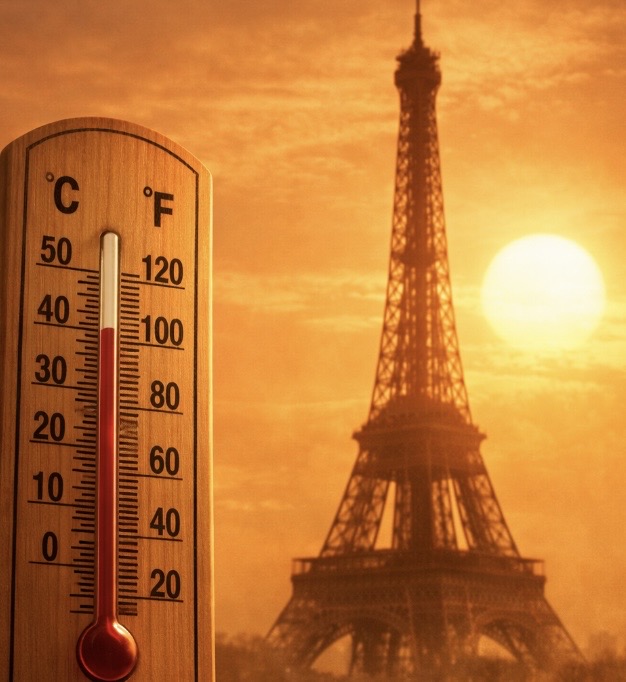
Paris is facing one of the most intense climate emergencies in recent memory after officials confirmed that one hundred nine people passed away within a single day during a severe and fast moving heatwave. What began as a typical summer stretch quickly escalated into a dangerous situation that left families, communities, and health workers overwhelmed.
Paris experienced temperatures far beyond what many residents could safely tolerate. Streets that are usually full of life felt unusually still. The air was thick, unmoving, and difficult to breathe. Many of the individuals who passed away were older adults, people with existing health conditions, and residents living in older buildings without cooling systems. Emergency services reported a sharp rise in calls as people struggled with dehydration, heat exhaustion, and respiratory distress.
Medical teams worked around the clock as emergency rooms filled with patients suffering from severe heat related illness. Doctors described the surge as one of the most demanding they had ever experienced. Cooling centers were opened across the city, but for many, the heat had already taken a serious toll. The combination of extreme temperatures, high humidity, and limited airflow created conditions that the human body could not
withstand.
Several factors contributed to the sudden rise in loss of life. Record temperatures pushed past safe limits. Urban heat islands trapped warmth in densely built areas. Many older homes had limited access to cooling. Underlying health conditions intensified under extreme heat. Rapid temperature spikes gave residents little time to adjust. Climate specialists warn that events like this are becoming more frequent, making preparation and public awareness essential.
Across Paris, families are grieving loved ones who passed away unexpectedly. Neighbors are checking in on one another, and community groups are stepping up to help vulnerable residents stay safe. The tragedy has sparked conversations about how cities can better protect people during extreme weather. Officials are urging residents to stay hydrated, avoid direct sunlight, and seek medical care at the earliest signs of heat related illness.
The loss of one hundred nine lives in just twenty four hours is a powerful reminder of how quickly extreme weather can shift from uncomfortable to dangerous. Paris is now reviewing emergency plans, cooling infrastructure, and public safety strategies to prevent another event of this scale. As temperatures continue to rise, the city remains alert and focused on protecting its residents.
- A Young Woman Who Loved Life Fo...
- College Student Passes Away Aft...
- Hairstylist Faces Assault Charg...
- Georgia Twins Pass Away After D...
- Man Suddenly Passes Away After ...
- Florida Woman Fatally Injured S...
- Mary J. Blige’s Perspective O...